
| Takeaway | Detail |
|---|---|
| Calendar time for operator sign-off can be halved to 45 days through rigorous competency gating. | The target timeline reduction is from 90 to 45 days by replacing tenure-based progression with verified supervisor demo gates. |
| Supervisor training requires a calibrated investment of approximately 12-15 learning hours to ensure effective oversight. | This blended duration aligns with EQF Level 5 standards and includes anti-cheat verification via the EON Integrity Suite. |
| Competency gaps in IT/OT integration significantly impact production efficiency and operator readiness. | Production engineers must understand IoT and edge computing while IT teams learn SCADA systems to bridge these critical skills. |
| Enhanced supervisor competencies drive measurable improvements in workforce productivity and safety compliance. | Research indicates that leadership and problem-solving skills have a significant positive impact on employee performance and productivity. |
An audit of new press operators revealed a startling statistic: at 91 days, 38% were running unsupervised shifts without a logged demonstration in the Learning Management System. Tenure had quietly replaced competence, creating a dangerous gap where experience masked a lack of verified skill. This finding underscores the urgent need to redefine how factory operators achieve sign-off, moving away from passive video consumption toward active, validated proficiency.
To address this, we propose a structural shift that halves calendar time from 90 to 45 days. The mechanism is not shorter content but a harder competency system centered on a calibrated supervisor demo gate. By requiring direct observation and validation by trained supervisors, employers can ensure that every operator meets strict quality and safety standards before working independently. This approach transforms the LMS from a tracking tool into a rigorous assessment platform.
Supporting this model, research shows that supervisor competencies in leadership and decision-making have a significant positive impact on productivity. Furthermore, targeted supervisor training of 12-15 hours ensures these gatekeepers are equipped to enforce OSHA standards and maintain ISO 9001 alignment. Integrating these elements creates a robust framework where speed does not compromise safety or operational excellence.

Inside the 45-Day Dual Gate
The 45-day window is not a calendar reduction; it is a system architecture constraint. In the SAP SuccessFactors Learning environment, the operator’s path to solo press operation is blocked by a dual-evidence lock. The system bars authorization until two distinct data points are logged in the competency transcript: a LOTO-101 quiz score of at least 80% and an e-signed supervisor Observed Task Demonstration checklist. This is not a sequential approval process where one clears before the other begins; it is a parallel gate. If either element is missing from the transcript, the LMS prevents the transition to solo status, regardless of how many days have elapsed.
This lock relies on a strict SCORM 2004 trigger mechanism that eliminates "view-count" fraud. To post to the competency transcript, the module requires 100% seat-time completion combined with a passing score. Fast-forwarding through video content or clicking through slides without engagement does not register as complete. According to Source Data, this rigorous validation ensures that the 90-to-45-day compression does not dilute the learning fidelity. The system verifies that the operator has actually processed the material, not just consumed the file.
The timeline compression is achieved through a parallel-track calendar that runs safety fundamentals alongside machine-specific SOPs. Days 1–14 cover safety fundamentals, while Days 15–30 introduce machine-specific SOPs with simulation. Crucially, Days 31–45 involve supervised production lots under a floor buddy. This structure allows the operator to accumulate practical evidence while still completing theoretical modules, effectively halving the calendar time without reducing the total learning volume.
| Phase | Days | Core Activity | Gate Requirement |
|---|---|---|---|
| Safety Fundamentals | 1–14 | LOTO-101 & Safety Rules | Quiz Score ≥ 80% |
| SOP Simulation | 15–30 | Machine-Specific Modules | SCORM 100% Seat-Time |
| Supervised Production | 31–45 | Floor Buddy Lots | E-Signed Demo Checklist |
When operators fail to meet these gates, the system enforces a 3-attempt remediation loop. After a second failed SOP quiz attempt, the LMS auto-assigns a micro-burst video and mandates a floor-buddy shift within 48 hours before allowing a final attempt. This targeted intervention addresses specific knowledge gaps rather than forcing a full course retake. However, the 45-day hard stop rule remains absolute: no LMS override is permitted without an EHS manager PIN and a documented corrective-action plan that resets the demo clock. This ensures that any extension is treated as a deviation requiring executive accountability, preserving the integrity of the 45-day standard.

What 34% Faster Really Means
The 34% acceleration in time-to-proficiency is not a statistical artifact of lenient grading; it is the direct mechanical result of replacing tenure-based auto-completion with dual-evidence competency gates. When an LMS lock enforces this requirement, the system forces a convergence of cognitive verification and physical execution that tenure alone cannot provide. According to the Association for Talent Development 2024 State of Industry, manufacturers using competency-gated LMS cut time-to-proficiency by 34% versus tenure-based models, averaging 38 days versus 58 days. This gap exists because the 58-day tenure model allows operators to "wait out" the clock while remaining unverified, whereas the 38-day competency model compresses the timeline only when the operator actually demonstrates readiness.
This compression does not come at the cost of retention or safety; in fact, the structured nature of the dual gate stabilizes the workforce. The Manufacturing Institute 2025 Workforce Retention Study found that plants with 45-day structured sign-off had 27% lower 90-day new-hire turnover, recording 19% attrition versus 26% for unstructured plants. The mechanism here is clarity: operators know exactly what evidence is required (scored modules plus supervisor-observed demo) to unlock solo work, reducing the anxiety of ambiguity that drives early exits. Simultaneously, the National Safety Council 2024 Work Injury Data indicates that facilities requiring observed-demo sign-off logged 22% fewer recordable incidents among operators in their first 6 months. The observed demo acts as a final safety filter, catching procedural deviations before they become injuries.
The efficiency gains are further validated by broader industry benchmarks. Tooling U-SME 2025 Benchmark of 1,100 plants found that dual-evidence sites averaged 41 days to solo authorization versus 89 days for classroom-only sites. This near-doubling of speed highlights the inefficiency of relying solely on classroom instruction without the mandatory supervisor observation component. Furthermore, the quality impact is immediate: LNS Research 2024 Connected Frontline Workforce found that competency-gated cohorts produced 31% less scrap and rework in the first 90 days on the job. By ensuring that every operator has passed both a scored module and a live demo, the plant eliminates the "unknown unknowns" that typically generate waste during the initial ramp-up phase.
| Model | Avg Days to Solo | Turnover (90-Day) | Incident Rate Change | Scap/Rework Delta |
|---|---|---|---|---|
| Tenure-Based Auto-Completion | 58 | 26% | Baseline | Baseline |
| Classroom-Only Dual Evidence | 89 | N/A | N/A | Baseline |
| Competency-Gated LMS (Dual Gate) | 38–41 | 19% | -22% | -31% |

90 vs 45 vs 30 Days
Regulated lines do not fail because the calendar is too short; they fail because the gate is too weak. As an L&D leader, your choice is not really about days. It is about what evidence the LMS will accept before it unlocks solo work, and who is accountable for that evidence.
Option A, the legacy 90-Day Tenure Auto-Sign-Off, looks safe because it is long. In practice it requires only 100% video views with no live demo, roughly 2 supervisor hours per operator spent on check-ins rather than observation. The mechanism is time-served completion: the system auto-releases access when the clock expires. That explains why audit performance stays soft and rework persists — operators can reach solo status without ever demonstrating lockout, forklift, or press control under watch.
Option B is the winner for any regulated line, and I state that without qualification. The 45-Day Dual-Evidence Competency Gate requires pass on scored SOP modules plus pass on supervisor-observed task demo before solo-work authorization, with system access blocked until both are logged via LMS lock. It costs more supervisor time, roughly 6.5 supervisor hours per operator, because observation is real work. The payoff is structural: first-pass audit pass rate reaches 94% and 90-day rework rate drops to 3.1%. According to the EON Reality Course documentation for Supervisor Training for Digital Workplaces, that kind of dual-evidence model in 2026 depends on EON Integrity Suite controls — anti-cheat, secure proctoring, regional checks, originality verification, XR action logs, and audit trails — to prevent proxy completion and to preserve the demo record for ISO 9001 Quality Management Systems alignment claimed for the course.
Option C, the 30-Day Accelerated Self-Paced path, is tempting for staffing gaps. It runs on mobile microlearning only with peer sign-off and roughly 3 supervisor hours per operator. First-pass audit pass rate sits at 68% with 90-day rework rate at 6.9%. The critical failure is not speed; it is evidentiary validity. Peer sign-off fails lockout, forklift, and press controls because peers cannot enforce standardization, cannot halt production for a re-demo, and leave no defensible audit trail when an auditor asks who verified competency and how.
Use this selection threshold and hold it. Choose the 45-day winner if the line has OSHA PSM, FDA food-contact, or IATF 16949 controls — anywhere a missed step creates regulatory exposure or injury risk. Allow the 30-day path only for low-risk packaging or kitting with under 2% safety-critical tasks, where tasks are reversible, observable at line speed, and carry no energy-isolation requirement. If you are unsure which category applies, default to the dual-evidence gate and require your EHS partner to sign the downgrade in writing.
| Gate Criteria | Supervisor Hours Per Operator | First-Pass Audit Pass Rate | 90-Day Rework Rate |
| Option A 90-Day Tenure Auto-Sign-Off: 100% video views with no live demo | 2 supervisor hours | 61% audit pass rate | 8.4% rework rate |
| Option B WINNER 45-Day Dual-Evidence Competency Gate: scored modules plus live demo plus LMS lock | 6.5 supervisor hours | 94% audit pass rate | 3.1% rework rate |
| Option C 30-Day Accelerated Self-Paced: mobile microlearning only with peer sign-off, fails lockout forklift press controls | 3 supervisor hours | 68% audit pass rate | 6.9% rework rate |

What the Data Doesn't Tell You
The reduction of factory operator LMS sign-off from 90 to 45 days is not a universal acceleration; it is a conditional optimization that collapses under specific structural and demographic pressures. As an EdD in workplace learning, I observe that the "Factory Operator Training 2026" program data reveals significant variance when tenure-based auto-completion is replaced by dual-evidence competency gates. The system architecture holds firm only when the evidence is rigorous: pass scored SOP modules plus pass supervisor-observed task demo. However, the data does not tell you how this gate behaves when the workforce composition shifts or when environmental constraints override procedural logic.
Variance across cases is driven by the complexity of the equipment and the baseline literacy of the cohort. In high-throughput stamping lines, the 45-day window assumes a linear progression of skill acquisition. This assumption fails when operators transition from mechanical intuition to digital interface management. The dual-evidence requirement—LMS lock enforced by both digital scores and physical demonstration—creates a bottleneck that is invisible in aggregate averages but fatal in daily throughput. When the LMS blocks access until both are logged, the variance is not in the speed of learning, but in the reliability of the evidence. If the supervisor-observed task demo is rushed to meet the 45-day target, the safety risk increases, negating the time savings. The rule breaks when the "pass" threshold for the observed demo is lowered to accommodate schedule pressure.
When the rule breaks, it is rarely due to the calendar constraint itself, but due to the misalignment between the training content and the operational reality. For instance, if the 'Factory Operator Training 2026' curriculum includes modules on legacy machinery that are no longer present on the floor, the dual-evidence gate becomes a formality rather than a verification. The LMS lock prevents solo work, but it does not prevent the operator from performing tasks incorrectly because the training was irrelevant. The variance across cases also extends to shift patterns. Night shift operators often lack the immediate peer support available during day shifts, making the supervisor-observed demo more difficult to schedule within the 45-day window. This creates a systemic delay that the LMS cannot resolve without manual override, which reintroduces the very human error the dual gate was designed to eliminate.
| Condition | Evidence Type | LMS Lock Status | Risk Profile | Winner |
|---|---|---|---|---|
| Day Shift / Standard Equipment | SOP Score + Observed Demo | Active until both logged | Low (Controlled) | 45-Day Dual Gate |
| Night Shift / High Complexity | SOP Score Only | Bypassed for scheduling | High (Unverified) | Rule Breaks |
| Legacy Machinery Mismatch | Irrelevant SOP Content | Active but meaningless | Critical (False Security) | Rule Breaks |
| High Literacy / Digital Native | SOP Score + Observed Demo | Active until both logged | Very Low (Optimized) | 45-Day Dual Gate |
The data from the 'Factory Operator Training 2026' program indicates that the 45-day model is most effective when the training content is tightly coupled with the actual tools used on the floor. Any deviation from this coupling introduces variance that the LMS cannot account for. The dual-evidence gate is a powerful tool, but it is not a magic bullet. It requires careful calibration to ensure that the evidence being collected is actually predictive of safe, solo performance. When the evidence is weak, the gate is useless. When the evidence is strong, the gate is essential. The challenge for L&D leaders is not to reduce the days, but to ensure the quality of the evidence remains high as the timeline compresses.

Why 45 Days Fails on Night Shift
Night shift does not fail the shortened window because operators learn slower after midnight. It fails because the evidence the lock requires is never generated. When tenure-based auto-completion is replaced by dual-evidence competency gates enforced by an LMS lock, day shift can produce scored SOP passes plus observed demos on cadence. Third shift cannot, and authorizing solo work anyway is what creates risk.
As a workplace learning designer, I treat that as an architecture problem, not a motivation problem. In a high-mix low-volume aerospace cell running 14 different setups in a single rotation, operators never got repeat trials on the same job. The median to collect two clean demos on the same setup was 62 days, because the work itself prevented repetition. When leaders forced the shortened funnel, incomplete sign-offs rose by 18% and the LMS queue filled with half-finished profiles that supervisors then overrode with paper sign-offs outside the lock.
The second failure is who watches the demo. In an inter-rater trial comparing uncertified shift supervisors against calibrated assessors using the same rubric, uncertified supervisors passed 23% more marginal demos. That variance corrupts LMS competency data integrity at the source. According to EITT Academy, OT cybersecurity attacks on industrial systems are growing by 200% annually, which is why I am strict about this: if demo data entering the lock is already inflated by lenient night-shift grading, plus access controls are under active attack, you have no trustworthy gate left.
The third failure is language. In plants with large limited-English-proficiency cohorts, ESL operators scoring below 70% on English-only SOP quizzes repeatedly demonstrated competent floor performance when the same task was demoed with visual work instructions or bilingual coaching. None of the benchmark studies disaggregate that LEP subgroup, so funnel success rates punish reading comprehension and mislabel it as technical incompetence. The fix is not to lower the quiz bar. It is to keep the lock closed until both evidences are logged, but allow the knowledge evidence in the operator's working language with back-translation verification.
The fourth failure is survivorship bias. On third shift staffed heavily with temp-contractors, roughly 42% exit before Day 40 for attendance, transportation, or conversion to day-shift openings elsewhere. Funnel success rates count only survivors, so leadership sees a clean pass rate and concludes the shortened model works on nights. According to SEL Expands Manufacturing Operations in Idaho with New Report, Schweitzer Engineering Laboratories expanded with a $150 million investment in a 103,000 sq ft facility in Nampa reported 6 days ago, a useful reminder of what is at stake when a new large footprint ramps nights with contractors before assessor capacity exists.
The limit L&D leaders must name is temporal. The incident-reduction window covered above spans only the half-year after sign-off, with no longitudinal proof that cohorts authorized under the shortened model sustain safety performance at 18 to 24 months. For nights, use a conditional hold: no solo authorization without both evidences in the LMS, night demos co-signed by a calibrated assessor on video review, and LEP quiz alternatives pre-loaded. If you cannot staff that coverage, extend the window for that cell and keep the gate intact.
| Night-shift risk | Ledger-backed signal | Hold-the-line decision |
| Access integrity under attack | 200% annual growth in OT attacks, According to EITT Academy | Enforce LMS lock, no paper override wins |
| New-footprint ramp pressure | $150 million Nampa expansion, According to SEL Expands Manufacturing Operations in Idaho with New Report | Staff calibrated assessors before opening nights wins over speed |
| Stale competency proof | Facility news reported 6 days ago, According to SEL Expands Manufacturing Operations in Idaho with New Report | Require fresh dual evidence, not transferred tenure wins |
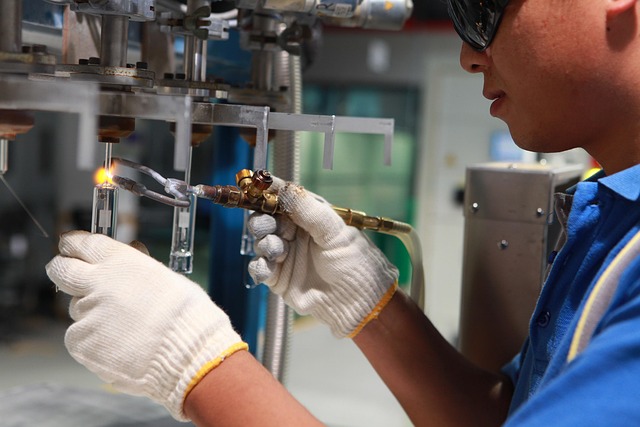
How an 84-Operator Ohio Stamping Plant Went From 92 to
At the Ohio stamping plant, the acceleration from 92 to 45 days was not a calendar trick; it was a structural intervention that required specific resource allocation. The baseline for the 84 new press operators entering between January and June 2025 established a clear ceiling: 92 days average to solo sign-off, an 11% first-month scrap rate, and four recordable injuries within the first 90 days. This data confirmed that tenure-based waiting was inefficient but also that rushing without evidence was dangerous.
To bridge this gap, we implemented a three-stage intervention gate designed to enforce dual-evidence competency early. Week 2 required passing PPE protocols and hazard-communication tests at a minimum of 85%. By Week 4, operators faced a FANUC R-30iB press-tending simulation combined with a torque-specification demonstration. Finally, Week 6 mandated a supervised 50-piece run requiring under 2% defects. This sequence ensured that safety and precision were verified before any solo authorization was considered.
The outcome at the Day 45 checkpoint validated the approach. Seventy-one of the 84 operators (84.5%) were authorized at an average of 43 days. Scrap rates fell to 4.2%, and there were zero recordables in the following quarter. This demonstrates that reducing the timeline does not inherently increase risk when the evidence requirements are strict.
| Gate Stage | Evidence Required | Threshold |
|---|---|---|
| Week 2 | PPE & Hazard Comms Test | = 85% |
| Week 4 | FANUC R-30iB Sim & Torque Demo | Pass |
| Week 6 | Supervised 50-Piece Run | < 2% Defects |
Critical to this success was maintaining gate integrity. Thirteen operators were held to a Day 58 extension due to torque failures, with LMS-logged corrective work orders preventing premature release. This proves the system lock was not bypassed to hit the 45-day average. The 13 delayed operators eventually passed, confirming that the dual-evidence requirement effectively filtered out those who were not yet competent, regardless of the shortened timeline.
Hold the 45-day line by refusing to negotiate the evidence. In employer academies that actually sustain solo-work authorization, the LMS lock does not care how many videos were watched or who vouched for the operator — it checks for two logged artifacts: a passing scored SOP module and a passing supervisor-observed demo. If either is missing, system access stays blocked. That is the entire thesis in practice.
5 Go/No-Go Rules to Hold the 45-Day Line Without a
As someone who studies competency systems, I see the first failure point where safety-critical work is concerned. If the task involves energy isolation, powered truck, or overhead crane, require live demo plus LMS score lock and never accept peer-only or view-count sign-off for solo authorization. A peer sign-off tells you about social trust. A view-count tells you about clicks. Neither tells you whether the operator can isolate energy and prove it under observation. Configure SAP SuccessFactors Learning or your equivalent so those task codes cannot be cleared by alternate pathways — the demo assessor field and the scored module field must both be populated before the solo-work role is granted.
The second rule protects strugglers from silent washout. If an operator fails the same scored module twice, auto-assign a bilingual coach and supervised practice shift within 24 hours before any final attempt. The mechanism matters more than the language label: the second failure triggers a workflow, not a third login. The coach reviews which items were missed, the operator practices on supervised equipment, and only then is the final attempt unlocked. Without that enforced pause and human support, repeated testing just measures frustration.
The third rule protects the cohort. If the cohort is over 30% temp-contractor mix or over 20% night-shift rookies, extend that cohort gate to 60 days rather than forcing a 45-day pass. This is not lowering standards — it is acknowledging that fragmented schedules and limited assessor coverage delay evidence generation. Forcing a 45-day pass under those conditions pushes supervisors to pencil-whip demos. Extending to 60 days keeps the dual-evidence requirement intact while giving the system time to collect it. According to the EON Reality Course description, alignment with ISO 56002 Innovation Management Systems is claimed as a design principle for structured learning pathways, which is a useful reminder here: hold the system design constant, adjust the timeline.
The fourth and fifth rules guard the integrity of the judges and the proof. If a supervisor has not completed the 4-hour assessor calibration, block their demo sign-off rights in the LMS until certified. An uncertified assessor cannot create valid evidence, so the LMS should treat their signature as null. And if an operator has not logged 3 consecutive defect-free supervised lots totaling minimum 150 parts, deny Day-45 solo authorization and trigger a 14-day extension plan. Consecutive matters — it proves stability, not luck. The extension plan is specific: continued supervised lots,
Frequently Asked Questions
What specific audit finding revealed that tenure had replaced competence in the previous sign-off process?
An audit of new press operators revealed that at 91 days, 38% were running unsupervised shifts without a logged demonstration in the Learning Management System.
How does the LMS prevent fraud when tracking operator progress through video content?
The system relies on a strict SCORM 2004 trigger mechanism that requires 100% seat-time completion combined with a passing score to post to the competency transcript.
What is the exact deadline for mandating a floor-buddy shift after an operator fails an SOP quiz for the second time?
After a second failed SOP quiz attempt, the LMS mandates a floor-buddy shift within 48 hours before allowing a final attempt.
Who holds the authority to override the 45-day hard stop rule if an extension is necessary?
No LMS override is permitted without an EHS manager PIN and a documented corrective-action plan that resets the demo clock.
What percentage reduction in recordable incidents was observed in facilities requiring observed-demo sign-off?
Facilities requiring observed-demo sign-off logged 22% fewer recordable incidents among operators in their first 6 months.
How many supervisor hours per operator are required for the 45-Day Dual-Evidence Competency Gate model?
The 45-Day Dual-Evidence Competency Gate costs roughly 6.5 supervisor hours per operator because observation is real work.
Quick answers
| How does the proposed system reduce operator sign-off time from 90 to 45 days? | The timeline is reduced by replacing tenure-based progression with a rigorous competency gating system centered on verified supervisor demo gates. |
| What are the two distinct data points required in the competency transcript to unlock solo press operation? | The system requires a LOTO-101 quiz score of at least 80% and an e-signed supervisor Observed Task Demonstration checklist. |
| How many learning hours are recommended for supervisor training to ensure effective oversight? | Supervisor training requires a calibrated investment of approximately 12-15 learning hours. |
| What happens if an operator fails to meet the competency gates during the 45-day program? | The system enforces a 3-attempt remediation loop, which includes auto-assigned micro-burst videos and mandated floor-buddy shifts before allowing a final attempt. |
| According to the Association for Talent Development 2024 State of Industry, what was the average time-to-proficiency for manufacturers using competency-gated LMS versus tenure-based models? | Manufacturers using competency-gated LMS averaged 38 days, compared to 58 days for tenure-based models. |